



From PCOS to PMOS: Understanding Infertility, Warning Signs, and Conception with IVF & ICSI

Many individuals planning a family or navigating fertility challenges are familiar with PCOS (Polycystic Ovary Syndrome). Recently, international medical consensus updated this condition's clinical name to PMOS (Polyendocrine Metabolic Ovarian Syndrome) to more accurately reflect its true pathophysiology and underlying mechanisms.
This article explains how PMOS impacts fertility, outlines key warning signs to watch for, and details a structured approach to conception—from metabolic optimization to advanced assisted reproductive technologies like IVF and ICSI.
From PCOS to PMOS: Why Was the Name Changed?
The historical term "PCOS" often led to the misconception that the condition is merely "cysts on the ovaries". In clinical reality, it is a complex, systemic endocrine and metabolic disorder. The new terminology, PMOS, highlights three critical clinical dimensions
Polyendocrine: Concurrent dysregulation across multiple hormone pathways.
Metabolic: Significant metabolic dysfunction, predominantly driven by insulin resistance.
Ovarian: Direct downstream dysfunction of ovarian activity and ovulation.
When insulin resistance is present, elevated circulating insulin triggers the ovaries to produce excess androgens (male hormones). This hormonal imbalance halts follicle development, preventing eggs from maturing and releasing predictably each cycle. Renaming the condition to PMOS allows both clinicians and patients to approach care holistically and address the root causes of the disorder.
(Reference: The transition from PCOS to PMOS was formally announced in May 2026 and is scheduled for full adoption in international clinical practice guidelines by 2028, with both terms used concurrently during the transition period).
How Does PMOS (PCOS) Lead to Infertility?
PMOS interferes with the reproductive process at several crucial stages, making natural conception difficult
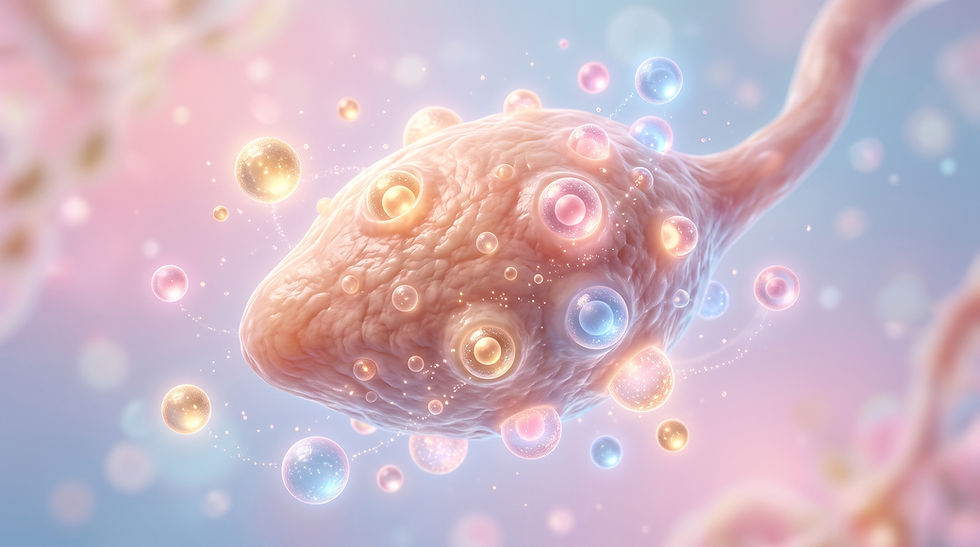
Chronic Anovulation: While ovaries in PMOS contain numerous small antral follicles, these follicles stall before reaching full maturity and fail to ovulate. Without a released, mature egg, fertilization cannot occur.
Impaired Oocyte Quality: Hyperinsulinemia and persistent, low-grade cellular inflammation can compromise the cellular energetics and quality of retrieved eggs.
Reduced Endometrial Receptivity: Persistent hormonal imbalances between estrogen and progesterone can disrupt optimal endometrial preparation, reducing the likelihood of successful embryo implantation.
6 Warning Signs of PCOS / PMOS
If you are planning to conceive, pay close attention to the following indicators:
Irregular, delayed, or absent menstrual cycles for consecutive months.
Rapid weight gain, difficulty losing weight, and abdominal fat accumulation.
Persistent acne and excessively oily skin.
Scalp hair thinning alongside hirsutism (excessive coarse hair growth on the face, chest, or body).
Acanthosis nigricans (thickened, velvety, darkened skin patches on the neck, armpits, or groin).
Inability to conceive after 12 months of unprotected intercourse (or after 6 months if the female partner is 35 or older).
Clinical Recommendation: If you experience two or more of these signs, consider scheduling a comprehensive diagnostic evaluation with a reproductive endocrinology specialist.
PMOS Extends Beyond Fertility
PMOS is a chronic metabolic condition. Beyond reproductive challenges, individuals with PMOS face an elevated lifetime risk for type 2 diabetes, dyslipidemia, and cardiovascular complications. A family history of PMOS or type 2 diabetes further increases this susceptibility. Addressing metabolic health early improves both fertility outcomes and long-term systemic wellness.
Step-by-Step Treatment Pathways for Conception
Treating PMOS to achieve pregnancy requires a structured, personalized medical strategy
Step 1: Lifestyle & Metabolic Management
The foundational step involves dietary modifications (focusing on low-glycemic foods to stabilize blood sugar), regular exercise, and medical management of insulin resistance. Restoring metabolic equilibrium often helps re-establish spontaneous, regular ovulation.
Step 2: Ovulation Induction
If lifestyle interventions do not restore regular ovulation, fertility specialists may prescribe ovulation induction medications while closely tracking follicle recruitment and development via transvaginal ultrasound.
Step 3: Assisted Reproductive Technology (ART)
When ovulation induction alone does not result in pregnancy, or when additional male-factor or age-related fertility challenges are identified, advanced fertility technologies offer significantly higher success rates:
IVF (In-Vitro Fertilization): Ovarian stimulation followed by egg retrieval, allowing fertilization with sperm to take place within an embryology laboratory environment.
ICSI (Intracytoplasmic Sperm Injection): A micro-fertilization technique where a single, structurally optimal sperm is selected and injected directly into each mature egg. This is recommended for couples facing male-factor subfertility or prior low-fertilization history.
PGT-A (Preimplantation Genetic Testing for Aneuploidy): Genetic screening of blastocyst embryos to evaluate chromosomal balance prior to uterine transfer. This helps identify euploid embryos, reducing miscarriage risks and improving live-birth rates.
Important Safety Considerations: Managing OHSS in PMOS
Because women with PMOS typically maintain high ovarian reserves, their ovaries often respond strongly and rapidly to stimulation medications. This heightens the risk of Ovarian Hyperstimulation Syndrome (OHSS), a complication characterized by abdominal distension, fluid retention, and discomfort.
To safeguard patient safety, treatment must be supervised by experienced reproductive specialists using tailored stimulation dosing and a Freeze-All Strategy. Rather than performing a fresh transfer, all high-grade blastocysts are cryopreserved. The uterine transfer is then performed during a subsequent, prepared cycle once hormone levels normalize, mitigating OHSS risk while optimizing the uterine lining for implantation.
Frequently Asked Questions (FAQ)
Q: Are PMOS and PCOS the exact same condition?
A: Yes. PMOS is the updated medical term for PCOS. The new name accurately conveys that it is a multi-system endocrine and metabolic condition rather than an isolated ovarian cyst disorder.
Q: Can you conceive naturally with PCOS / PMOS?
A: Yes. Many women achieve natural conception after addressing metabolic health, improving insulin sensitivity, or using mild ovulation medications. If these approaches do not result in pregnancy after an appropriate window, medical fertility treatments provide clear next steps.
Q: Can PCOS / PMOS be permanently cured?
A: As a chronic metabolic-endocrine disorder, PMOS cannot be completely cured, but its symptoms, ovulatory function, and long-term metabolic risks can be managed with targeted medical and lifestyle interventions.
Q: Does every patient with PMOS need ICSI?
A: No. The decision between conventional IVF and ICSI depends on sperm parameters, fertilization history, and laboratory evaluations, which your fertility specialist will tailor to your diagnostic profile.
Q: When should I consult a fertility specialist?
A: You should seek an evaluation if you identify two or more PMOS warning signs, or if you have been trying to conceive without success for 12 months (or 6 months if aged 35 or older).
Turn PMOS Concerns into Confident Steps Toward Family Building
At Siam Fertility Clinic, our team of reproductive endocrinologists and embryologists provides international-standard laboratory care alongside personalized treatment plans designed for your safety and success.
References:
International Nomenclature Update: PCOS Transition to PMOS (May 2026), International Clinical Practice Guidelines 2028.
PCOS gets new name in effort to improve diagnosis for millions of women – FOX 9 (May 13, 2026).
PCOS Has a New Name — And It's Long Overdue – Main Line Fertility (May 14, 2026).


Comments